LLM 适配器与流式:从请求到 settlement
专栏:DeepSeek Harness · 第 11 / 14 篇第 7 篇的 step() 里,模型调用浓缩成了一句 preparedCall?.stream(request) ?? this.loopCtx.llm.stream(request)。这篇把这一行背后的整个世界展开。
适配器层的结构
先看这层的架构:消费方、运行时、waterfall、注册表与适配器的关系。

ctx.llm:一个 waterfall 通向所有适配器
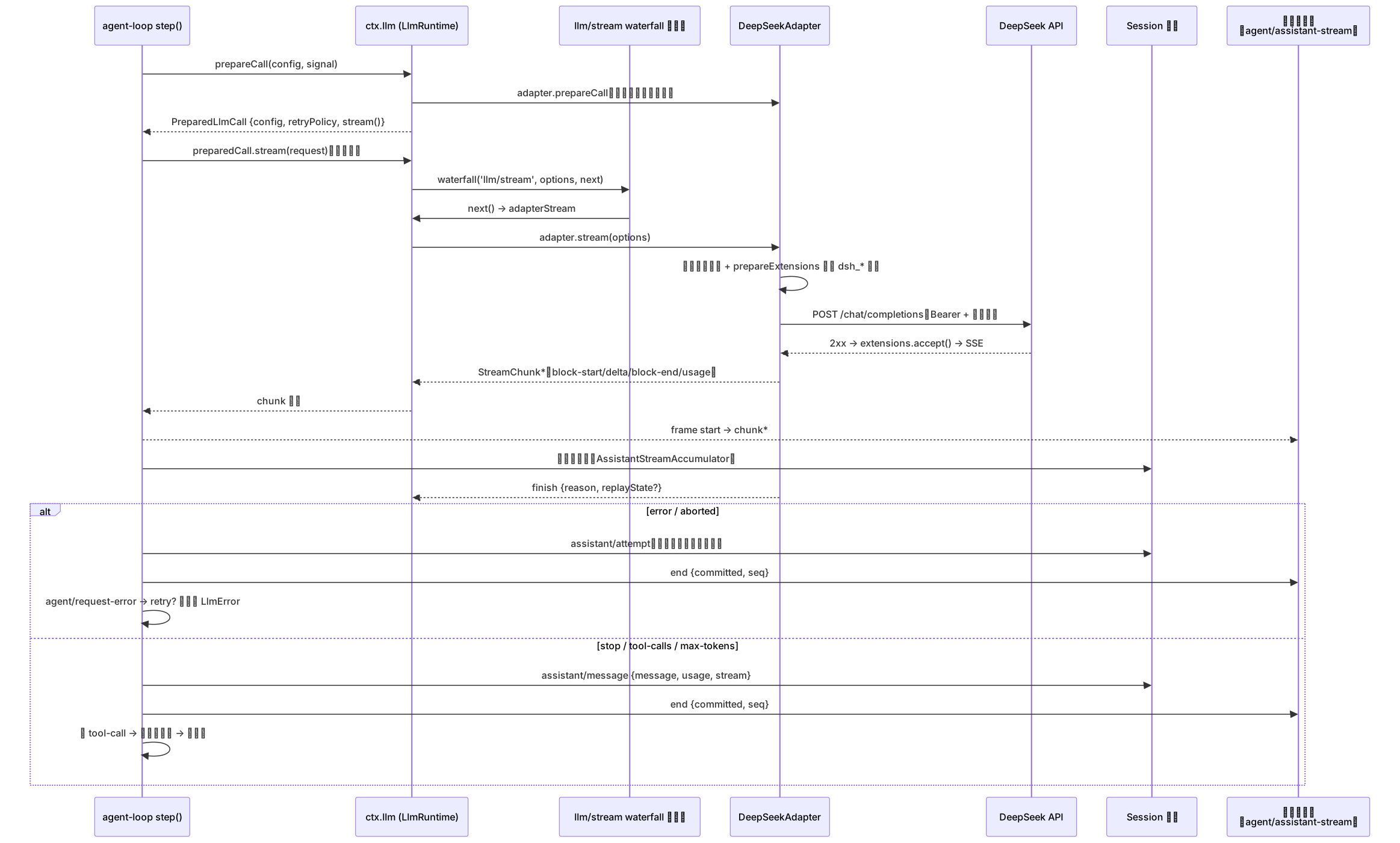
ctx.llm(LlmRuntime)对外只有一条流式入口,而它本身是一个 waterfall——适配器查找发生在 waterfall 的终端 continuation:
// packages/llm/llm/src/index.ts:53-74(节选)
declare module '@deepseek-ai/cordis' {
  interface Context {
    llm: LlmRuntime
  }
  interface Events {
    /**
     * Waterfall around every streaming model call (retry, replay, routing).
     * … A LOOP-built request carries the process-local
     * {@link markAgentLoopRequest} identity and arrives deep-frozen
     * (mutation throws): its content is a pure function of the session log …,
     * so listeners read it, never rewrite it.
     * @mode waterfall
     */
    'llm/stream'(this: LlmRuntime, options: GenerateOptions, next: () => AsyncIterable<StreamChunk>): AsyncIterable<StreamChunk>
  }
}
// packages/llm/llm/src/index.ts:1093-1104
stream(options: GenerateOptions): AsyncIterable<StreamChunk> {
return this.streamWithRegistration(options)
}
private streamWithRegistration(options: GenerateOptions, prepared?: PreparedDispatch) {
return this.ctx.waterfall(
this,
'llm/stream',
options,
() => this.adapterStream(options, prepared),
)
}这意味着:任何插件都可以拦截 llm/stream 短路(自产 chunk,如缓存/回放)、或调 next() 走到真适配器。loop 构建的请求深度冻结——监听器只能读,不能改写消息。
适配器注册是全或无的:ctx.llm.registerAdapter(['deepseek-official'], adapter),重复路由抛错,随 fiber 释放自动注销,还带 replace() 原子换路由。
适配器契约:唯一必选的方法是 stream
// packages/llm/llm/src/index.ts:257-278(节选)
export abstract class LlmAdapter ... {
  /**
   * Bind exact model metadata and the eventual request dispatch to one adapter
   * generation. Dynamic adapters override this so settings changes between
   * preparation and dispatch cannot combine one generation's capabilities with
   * another's endpoint.
   */
  async prepareCall(provider: string, model: string, signal?: AbortSignal): Promise<PreparedAdapterCall> {
    return {
      model: await this.resolveModel(provider, model, signal),
      stream: options => this.stream(options),
    }
  }

  /**
   * Stream one model call as raw chunks. The only required method.
   * @returns the chunk stream, obeying the adapter contract documented on StreamChunk.
   */
  abstract stream(options: GenerateOptions): AsyncIterable<StreamChunk>
}
prepareCall 存在的意义是代际绑定:loop 先准备(解析模型元数据、锁定本次调用的适配器注册与重试策略),再发流——设置热变更时,不会把 A 代际的能力结果配到 B 代际的端点上。
StreamChunk:七种分片的原始协议
// packages/llm/llm/src/types.ts:370-390
export type StreamChunk =
  | { type: 'block-start'; index: number; blockType: ContentBlockType }
  | { type: 'text-delta'; index: number; text: string }
  | { type: 'reasoning-delta'; index: number; text: string }
  | { type: 'tool-call-delta'; index: number; id: ToolCallId; name?: string; argumentsDelta: string }
  | { type: 'block-end'; index: number; block: ContentBlock }
  | { type: 'usage'; usage: TokenUsage }
  | {
    type: 'finish'
    reason: FinishReason        // stop / tool-calls / max-tokens / aborted / error
    replayState?: ReplayEnvelope
}适配器契约的硬规则:usage 必须在 finish 之前、之后不得再有分片;工具参数全程是原始 JSON 字符串(argumentsDelta 续片重发空串表示「不变」);错误只有两条合法路径——抛异常(传输故障)或带内 finish{kind:'error'|'aborted'}(协议内故障),不允许第三种。block-end 直接携带组装好的完整块,消费方可以不自己拼 delta。
双轨制:实时帧 vs 持久 settlement
模型流的消费分两条轨道,这是本篇最重要的区分:
轨道一(实时,进程本地):agent/assistant-stream 事件的三种帧:
// packages/core/agent/src/runtime-types.ts:74-107(节选)
export type AssistantStreamFrame =
  | { readonly type: 'start'; readonly attemptId: LlmAttemptId; readonly revision: number;
      readonly turn: number; readonly step: number }
  | { readonly type: 'chunk'; readonly attemptId: LlmAttemptId; ...; readonly chunk: StreamChunk }
  | { readonly type: 'end'; readonly attemptId: LlmAttemptId; ...;
      readonly outcome:
        | { readonly kind: 'committed'; readonly eventType: 'assistant/message' | 'assistant/attempt';
            readonly seq: SessionSeq }
| { readonly kind: 'abandoned' } }轨道二(持久):settlement 时落日志——成功是 assistant/message(内嵌完整的紧凑流与 usage),失败/重试/取消是 assistant/attempt(保留到达终局的流,但不进模型历史)。时序上先持久提交、后发终结帧:end 帧的 committed 携带刚落日志的 seq,UI 拿到它就能从实时模式无缝切到从日志回放。
loop 侧的分支逻辑(错误→attempt→征询重试):
// packages/core/agent-loop/src/agent.ts:425-448(节选)
const finish = live.finish
if (finish.kind === 'error' || finish.kind === 'aborted') {
  live.settle('assistant/attempt',
    () => this.session.append('assistant/attempt', { turn, step, stream: live.stream }).seq)
  const action = await this.dispatch.waterfall(
    'agent/request-error', { turn, step, provider: request.provider, failure: finish.failure, ... },
    () => Promise.resolve<RequestErrorAction>(undefined),
  )
  if (action?.kind !== 'retry') {
    throw new LlmError(finish.failure.message, finish.failure.code, finish.failure)
  }
  continue      // 重开一步:llm-retry 插件就挂在这里
}注意一条纪律:一次适配器调用 = 一次提供方尝试。适配器内部禁用库级重试;重试发生在 agent 层的持久步骤边界,每次尝试都在日志里留下独立带编号的 attempt。
deepseek 适配器:一个具体实现
llm-deepseek 包展示了接入一个真实提供方的全部要素。注册:
// packages/llm/llm-deepseek/src/index.ts:455-476(节选)
const adapter = new DeepSeekAdapter({
  options,
  resolveApiKey,            // 经 ctx.credentials seam,每次请求重新解析 → 密钥轮换免重启
  resolveUserId,
  resolveAttachments: () => ctx.get('attachments'),
  resolveImageAccess: (attachments, ref) => resolveImageAttachmentAccess(
    attachments,
    hostPath => ctx.get('fs')?.processPathFromHostPath(hostPath),  // ← 消费 fs seam!
    ref,
  ),
  prepareExtensions: (request) => { ... ctx.get('deepseekLlmApiExtensions')?.prepare(request) ... },
})
ctx.llm.registerConfigurableProviders([{ provider: PROVIDER, displayName: 'DeepSeek', ... }])
const registration = ctx.llm.registerAdapter([PROVIDER], adapter)
请求头(端点 ${baseURL}/chat/completions,默认 https://api.deepseek.com,兼容 OpenAI 网关):
// packages/llm/llm-deepseek/src/adapter.ts:531-543
const headers = {
  'authorization': `Bearer ${apiKey}`,
  'content-type': 'application/json',
  'accept': 'text/event-stream',
  ...attributionHeaders(),
  'x-deepseek-harness-user-id': String(userId),
  ...options.sessionId !== undefined ? { 'x-deepseek-harness-session-id': String(options.sessionId) } : {},
  ...options.purpose === 'compaction' ? { 'x-deepseek-harness-compact': '1' } : {},
}
流式路径由 300 秒空闲看门狗包裹(到期映射 TIMEOUT,不吞调用方中止);SSE 用 eventsource-parser 严格分帧,[DONE] 前流提前结束抛 STREAM_CLOSED;translate 层把 wire chunk 翻成 harness StreamChunk(连「把缓存命中 token 从 prompt_tokens 里拆出来保持计数不相交」这种细节都处理了)。
wire 扩展是另一个有意思的设计:dsh_plugin_packages、dsh_session_log 等插件向官方 API 请求注册 dsh_ 前缀的顶层字段(如会话日志的至少一次交付),字段在 messages/工具 schema 之外——不增加模型输入 token、不改变模型可见前缀。HTTP 2xx 后、读 SSE 前才确认接受。
全链路时序
与其他模块的联系
- session(第 6 篇):
assistant/message/assistant/attempt内嵌紧凑流,是回放与遥测的权威; - agent-loop(第 7 篇):
agent/request-errorwaterfall 上的 llm-retry 插件在持久步骤边界重试; - 凭据(第 12 篇):适配器经
ctx.credentials每请求解析密钥——轮换免重启; - fs(第 10 篇):附件路径经
processPathFromHostPath映射进执行世界——seam 思想无处不在。
全篇的钥匙还是第 6 篇那句「模型可见即已记录」:流的实时帧是瞬态的,持久世界只认 assistant/message / assistant/attempt 里内嵌的流。UI 断线重连、进程崩溃恢复、回放审计,全都从日志重建——实时帧只是锦上添花。
下一篇转产品视角:这一切如何被包装成人能用的审批流、权限档与三种应用形态。